motifs · kawung · parang
Batik Motifs and Their Meanings: Kawung, Parang, Truntum and More
From the four-petalled kawung to Cirebon’s layered clouds, a guide to the batik motifs you will see most often, what they are traditionally said to mean, and how regional palettes differ.
Batik motifs are more than decoration. In Java, patterns were long used to signal region, occasion and even rank, and many carry traditional meanings that still shape how batik is chosen and worn today. Those meanings are interpretations handed down through generations rather than fixed rules, so you will hear different versions in different places. Here are the motifs you are most likely to meet, and the stories often told about them.
Kawung: four ovals around a centre
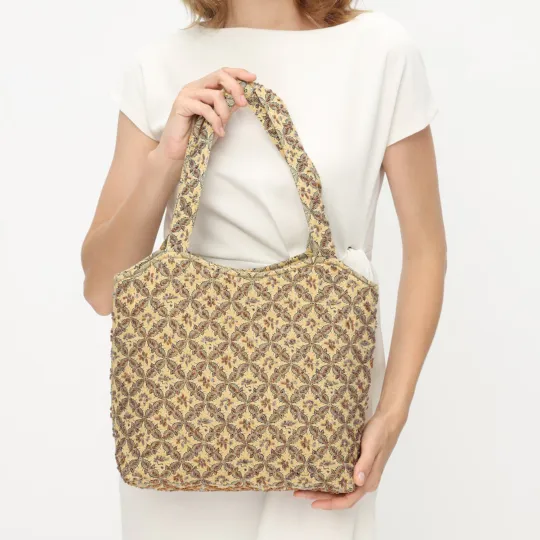
Kawung is one of the oldest and most recognisable batik motifs: four oval shapes arranged around a central point, repeated in a neat grid. The ovals are often likened to the fruit of the aren palm cut in cross-section. The motif is often associated with order, purity and self-control, and in the Central Javanese courts it was historically linked with royalty. Its calm geometry makes it one of the easiest motifs to recognise once you know it.
Parang: the diagonal wave
Parang is built from slanting, S-shaped bands that run diagonally across the cloth, often compared to breaking waves or to the edge of a blade. It is traditionally read as strength, perseverance and continuity — a line that never breaks. Several parang variations, including the bold parang rusak, were once reserved for the royal courts of Yogyakarta and Surakarta, and the motif is still associated with dignity and resolve. Restricted designs like these are known as batik larangan, or “forbidden” batik, which helps explain why some motifs still feel formal today.
Truntum: blossoms that bloom again
Truntum is a delicate scatter of small, star-like flowers on a dark ground. Its name is often explained as coming from a Javanese word meaning “to grow again”, and the motif is associated with love that renews and deepens over time. For that reason, truntum is traditionally worn by the parents of the bride and groom at Javanese weddings, as a quiet wish for the couple’s future.
Mega mendung: Cirebon’s clouds
Mega mendung, “overcast clouds”, comes from Cirebon on Java’s north coast. Its rounded, layered cloud forms are shaded in graduated bands, classically in blues or reds, and show the influence of Chinese decorative art on the port city’s makers. Rain clouds bring cool relief from the heat, so the motif is often associated with patience and a calm temper.
Sekar jagad: flowers of the world
Sekar jagad, often translated as “flowers of the world”, looks like a map of islands, each one filled with a different pattern. Bringing many motifs together on one cloth, it is associated with beauty, diversity and harmony, and it is a popular choice for celebrations.
Ceplok: the geometric family
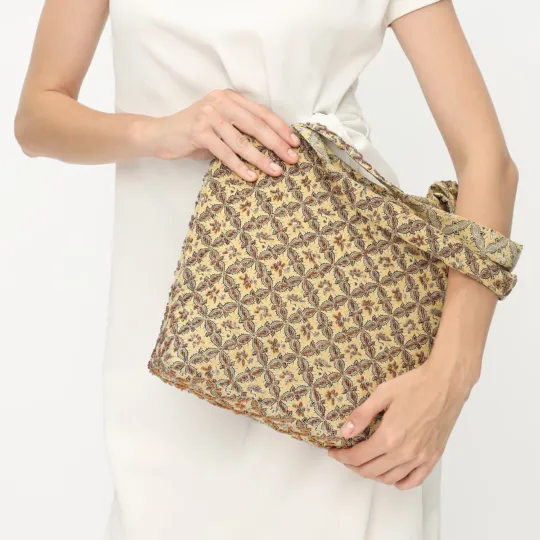
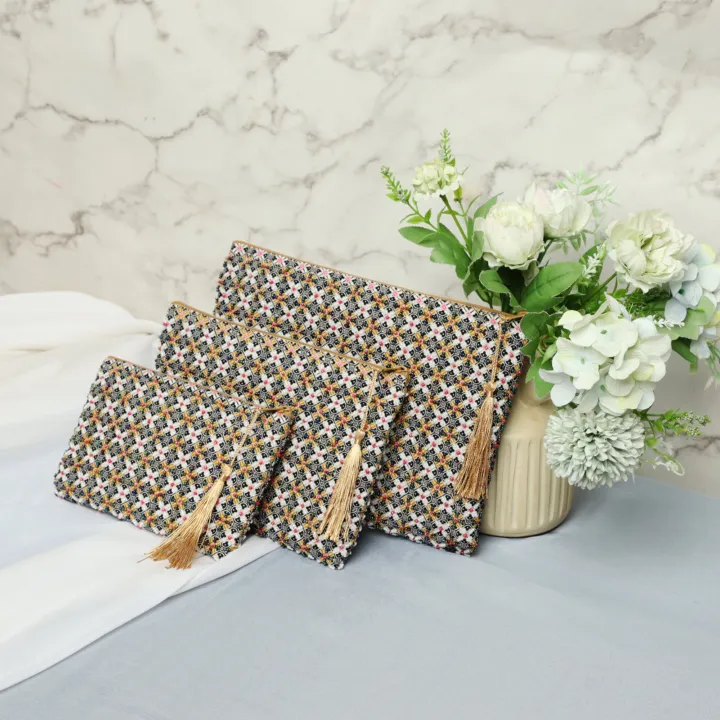
Ceplok is less a single motif than a family of geometric repeats built on squares, circles, stars and rosettes, arranged in a regular grid. Kawung is sometimes grouped within it. Ceplok designs feel orderly and balanced, which makes them a natural fit for structured shapes such as bags and pouches — look at the lattice-inspired patterns on the Golden Vine Tote or the Batik Royal Charm.
Where do batik florals come from?
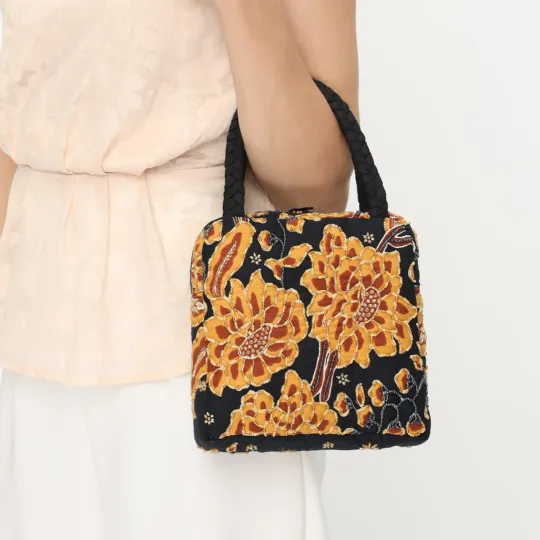
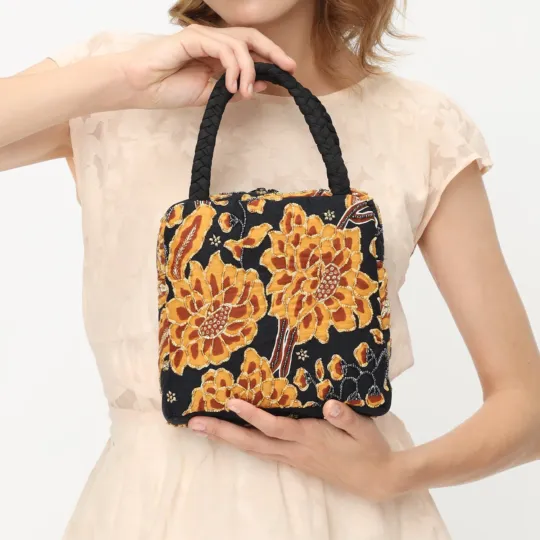
Flowers bloom across many batik traditions, but the lavish bouquets seen on so much modern batik owe a great deal to the north coast. In Pekalongan, the buketan style — loose bouquets of flowers, often with birds and butterflies — is associated with Indo-European workshops of the late 1800s and early 1900s, while Chinese-influenced makers in Lasem and Cirebon brought peonies, phoenixes and clouds. Those influences are why floral batik feels at once traditional and cosmopolitan.
Isen-isen: the fillings that bring a cloth to life
Between the main motifs, batik makers fill the background with isen-isen: tiny repeated marks such as cecek (dots), fine lines and small scrolls. They add texture and depth and show off the maker’s skill. In hand-drawn batik, a background of thousands of evenly spaced dots can take days on its own.
Is the crackle a motif?
Not quite, but it is one of batik’s signatures. When the wax cracks as the cloth is folded or handled, dye seeps into the cracks and leaves fine veins across the design. Some makers prize the effect and encourage it; others work hard to avoid it on their finest pieces. Either way, true crackle is a sign that wax was involved.
Sogan and pesisiran: two palettes
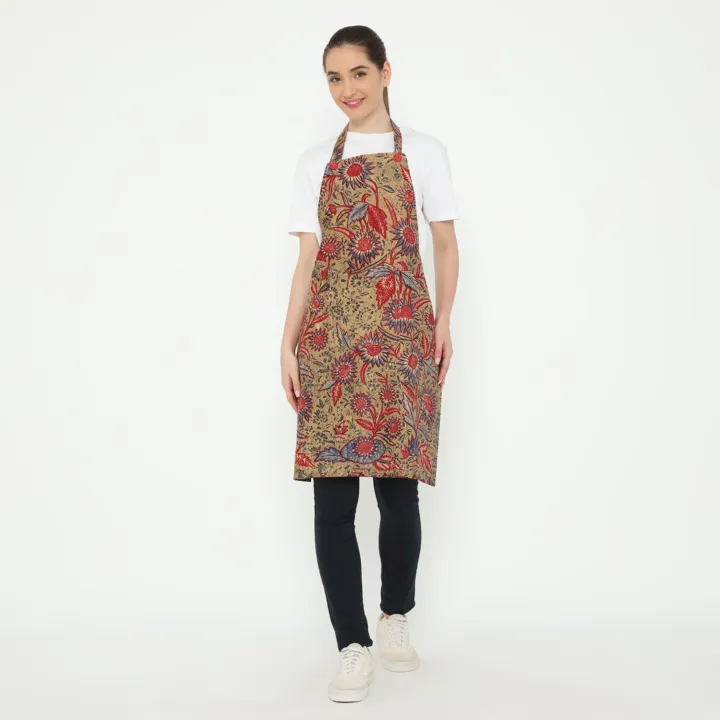
Batik also speaks through colour. The sogan style of the inland court cities, Yogyakarta and Surakarta, uses a restrained palette of soga brown, indigo and cream, traditionally from natural dyes, with formal motifs such as parang and kawung. The pesisiran, or north-coast, style of Pekalongan, Lasem and Cirebon grew up in busy trading ports and is known for brighter colours, florals, birds and clouds, reflecting Chinese, Arab, Indian and European influences.
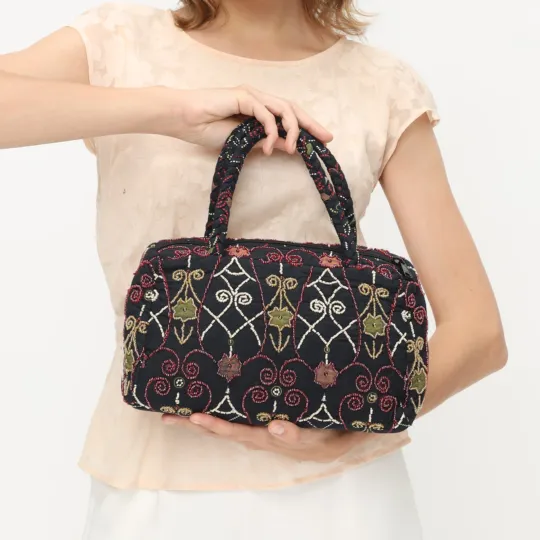
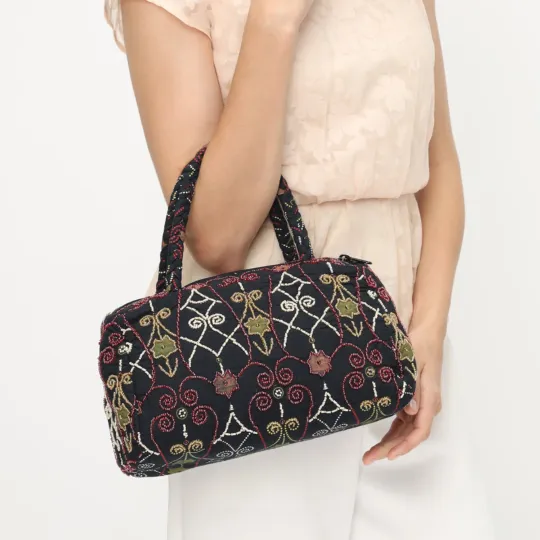
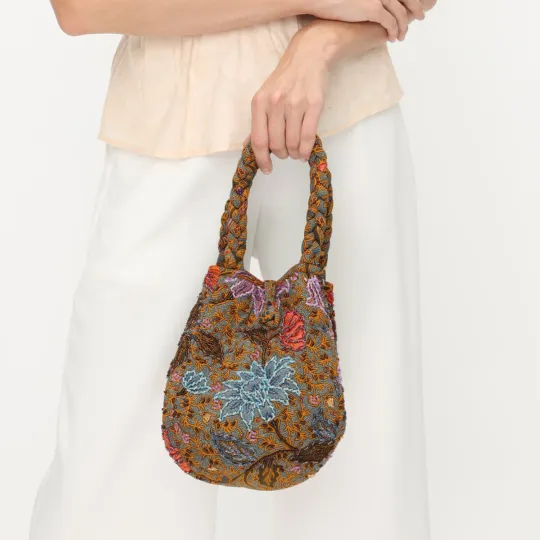
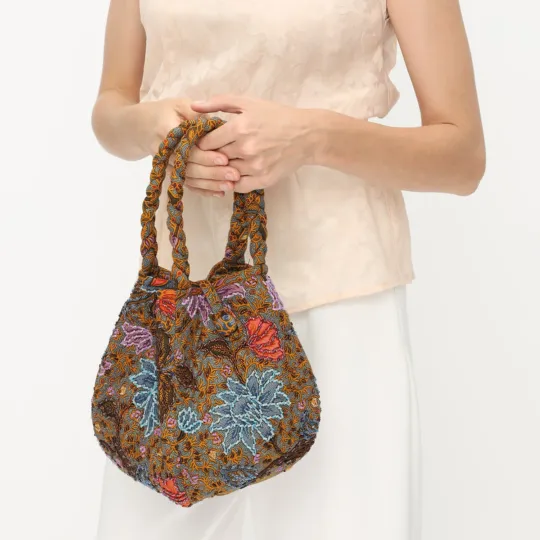
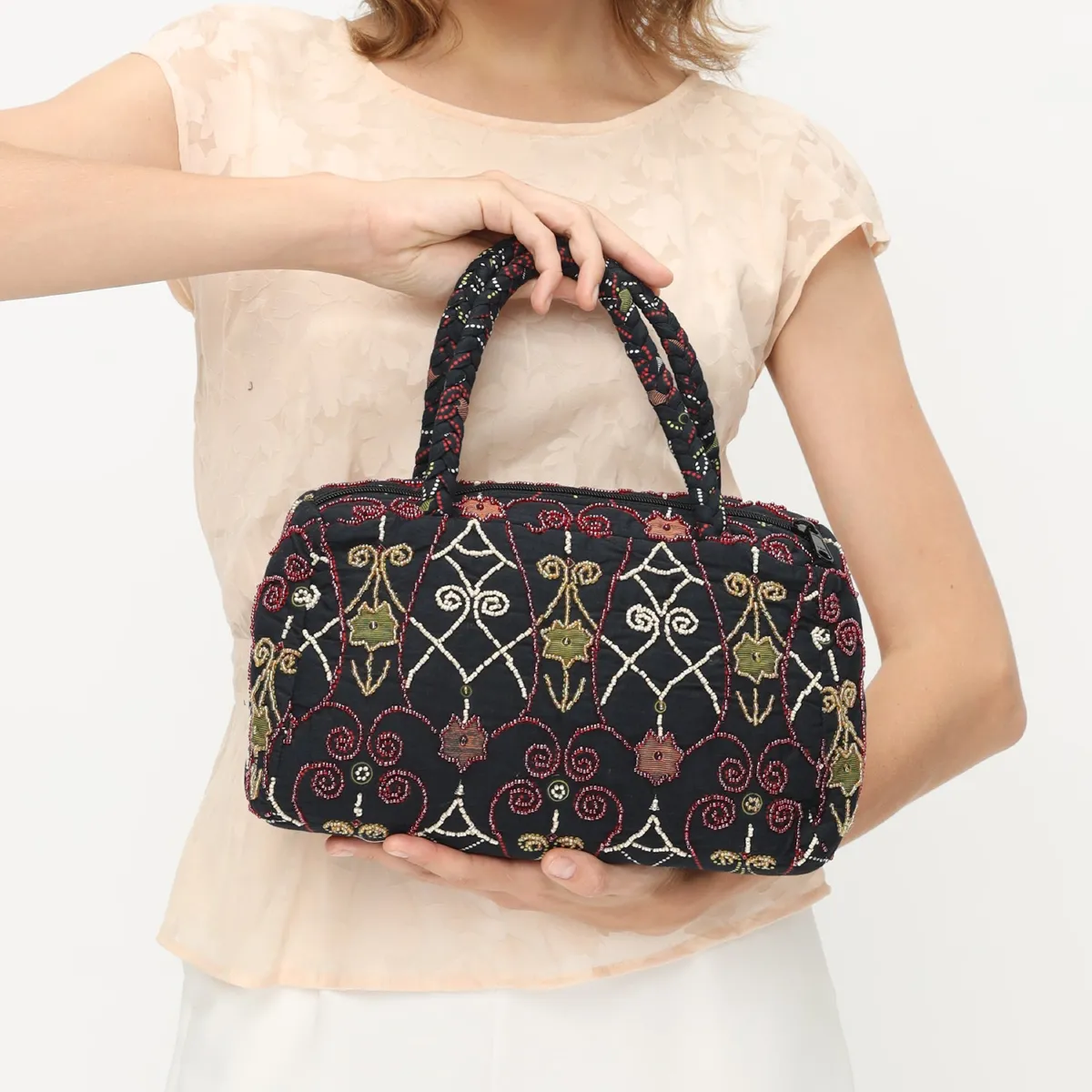
Our pieces draw on both moods: the warm browns of the Beaded Blossom nod to sogan, while florals such as the Honey Glow Batik and Jade Garden Beaded carry the colour of the coast.
Do motif meanings matter when you choose batik?
Today most people choose batik simply because they love how it looks, and that is reason enough. Knowing the stories adds another layer: truntum for a wedding, parang for someone starting something new. Learn how the cloth is made in the craft of batik, or browse the full collection.