01 · The idea
What is batik?
At its heart, batik is a way of drawing with wax. Molten wax is applied to cloth wherever the maker wants to keep the colour underneath. When the cloth is dyed, the waxed areas resist the dye; when the wax is removed, the pattern appears. Repeat the process with fresh wax and new colours and a design grows in layers, often over many days. The word itself is often said to come from the Javanese amba, to write, and titik, a dot — a fitting description of a craft built from lines and dots of wax.
Resist-dyeing is practised in many parts of the world, but it reached extraordinary refinement on the island of Java, where motifs came to carry meaning, status and regional identity. Batik was made for sarongs, headcloths and ceremonial cloths, and today it appears in everything from fashion to homeware. In 2009 UNESCO inscribed Indonesian Batik on the Representative List of the Intangible Cultural Heritage of Humanity, and Indonesia now marks National Batik Day every year on 2 October.
02 · Drawing
Batik tulis: drawn by hand with a canting
Batik tulis — literally “written batik” — is drawn freehand with a canting, a small copper reservoir with a fine spout set into a bamboo handle. The maker dips it into hot wax and traces each line, dot and outline, usually on both sides of the cloth so that the dye cannot creep through. Different canting do different jobs: fine spouts for outlines (klowong) and dots (cecek), and wider ones for filling in large areas (tembok).
It is painstaking work. A single complex cloth can take weeks or even months, and the slight wobble of a hand-drawn line is part of its beauty. Tulis is the most prized, and the most expensive, form of batik.
03 · Stamping
Batik cap: the copper stamp
From the mid-1800s, makers began to use the cap (pronounced “chap”): a copper stamp built from thin strips of metal bent into a motif. Dipped in hot wax and pressed onto the cloth, it lays down a whole section of pattern at once. A skilled stamper lines up each impression by eye, so that the repeats flow across the cloth without a visible break.
Cap batik is still true wax-resist batik, only faster, which made the cloth affordable for many more people. Look closely and you can often see where one stamp meets the next. Many cloths combine both methods, with stamped repeats and hand-drawn details.
04 · Colour
Dyeing, layering and nglorod
Once the wax has set, the cloth goes into the dye bath. Traditionally the palette came from nature: deep blues from indigo and warm browns from the bark of the soga tree. For each new colour, the maker waxes over the areas to protect and dyes again, usually working from the lightest colour to the darkest, so a many-coloured cloth may pass through the cycle several times. Natural dyeing is slow — a deep indigo can need many dips, with the cloth dried between each — and today many workshops use synthetic dyes alongside, or instead of, natural ones.
Finally comes nglorod: the cloth is boiled to melt the wax away and reveal the finished design. Where the wax cracked during handling, fine veins of dye seep through — the delicate crackle that is one of the signatures of wax-resist batik.
05 · Pattern
Reading the motifs
Batik motifs are a visual language, and their meanings are traditional interpretations handed down rather than fixed rules. Kawung, four ovals arranged around a centre, is often associated with order and purity. Parang, a diagonal band of blade-like waves, is traditionally read as strength and continuity. Truntum, a scatter of small blossoms, is linked with love that grows again and is traditionally worn by the parents at Javanese weddings. Some motifs are strictly geometric, like kawung and the grid-based ceplok family; others flow with plants, birds and clouds. Between them, tiny filling marks called isen-isen, such as dots and fine lines, give the background its texture.
Region matters too. The court cities of Yogyakarta and Surakarta favoured the restrained sogan palette of browns, indigo and cream, while the north-coast pesisiran workshops of Pekalongan, Lasem and Cirebon embraced brighter colours and motifs such as Cirebon’s layered clouds, mega mendung. Our journal goes deeper in Batik motifs and their meanings.

06 · Our pieces
From cloth to keepsake: how our pieces are made
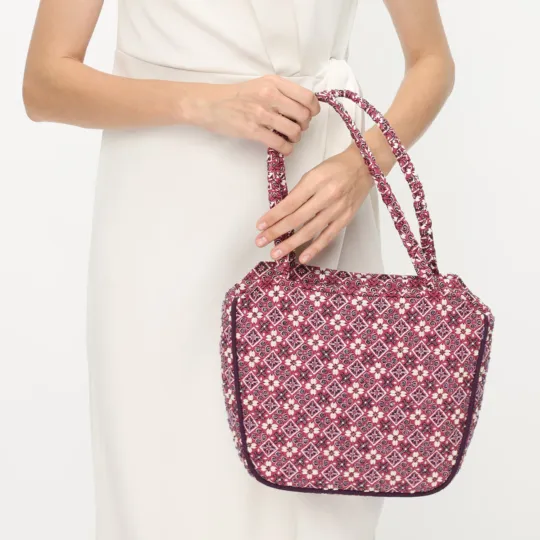
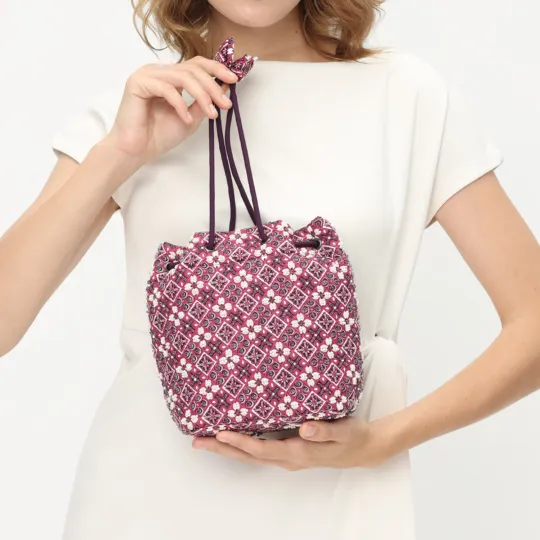
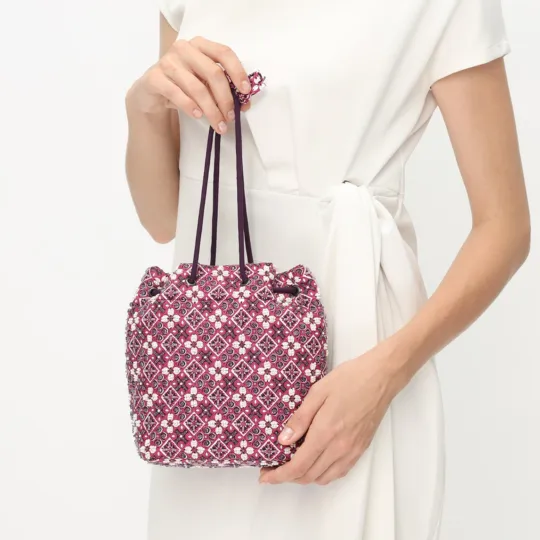
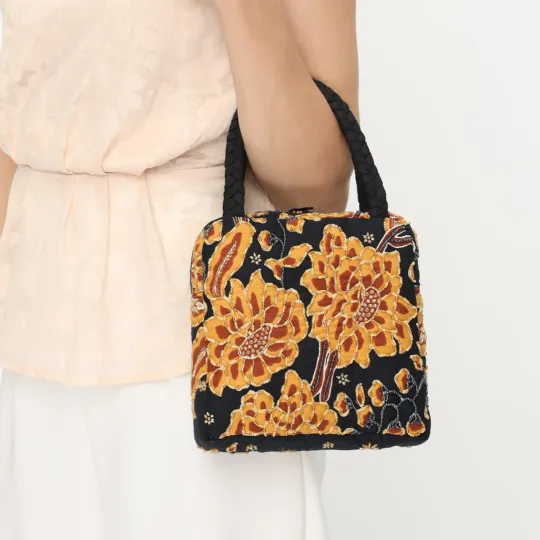
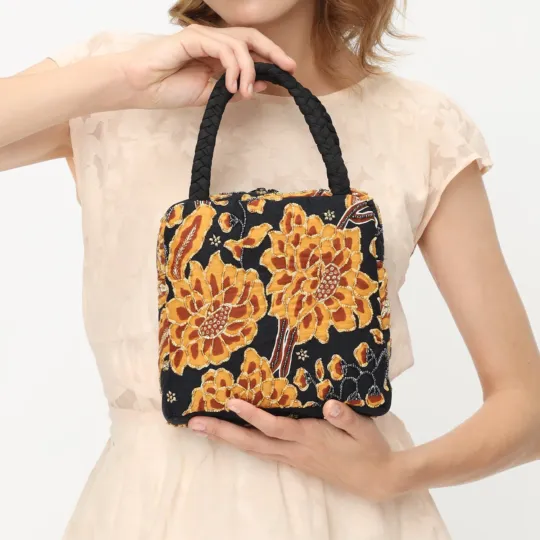
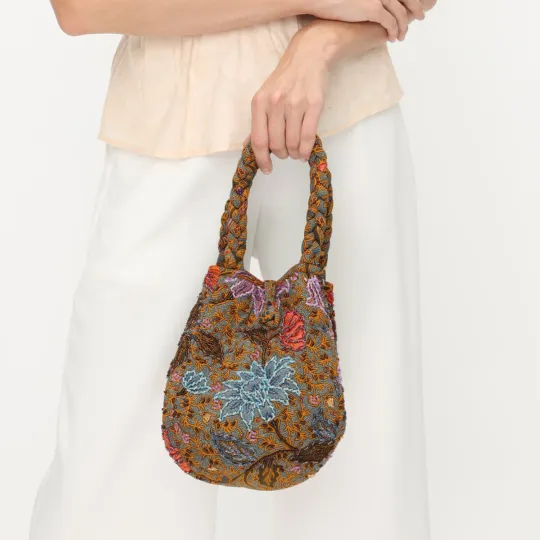
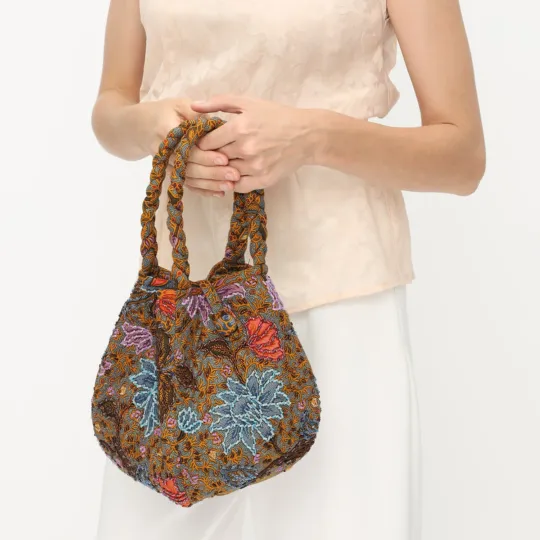
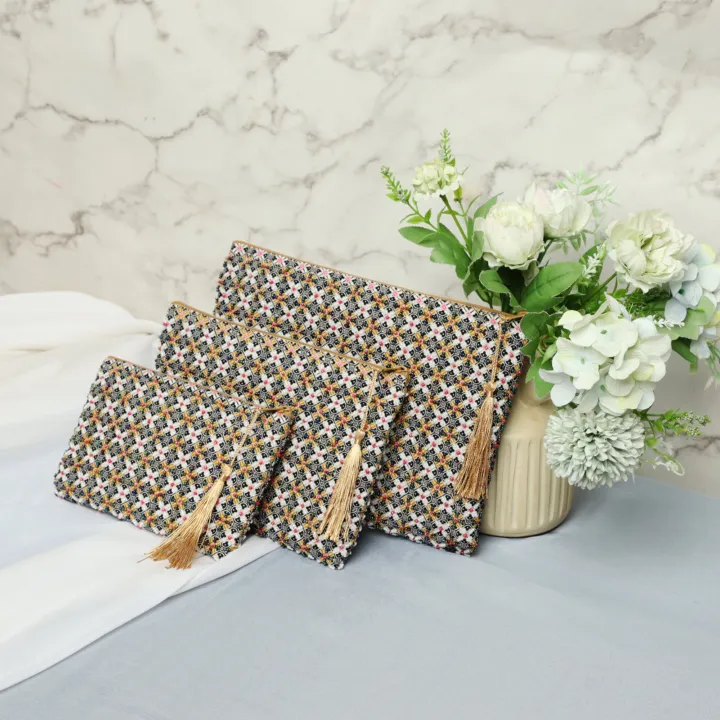
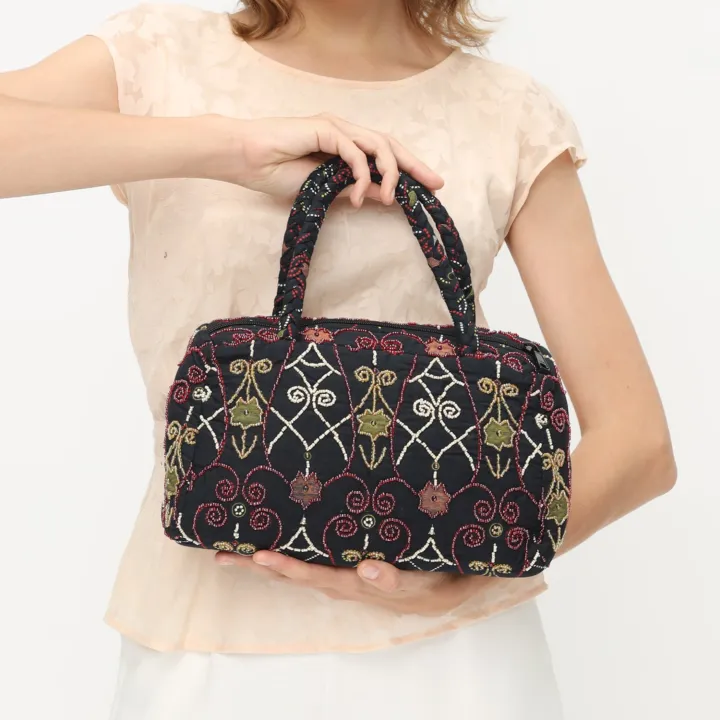
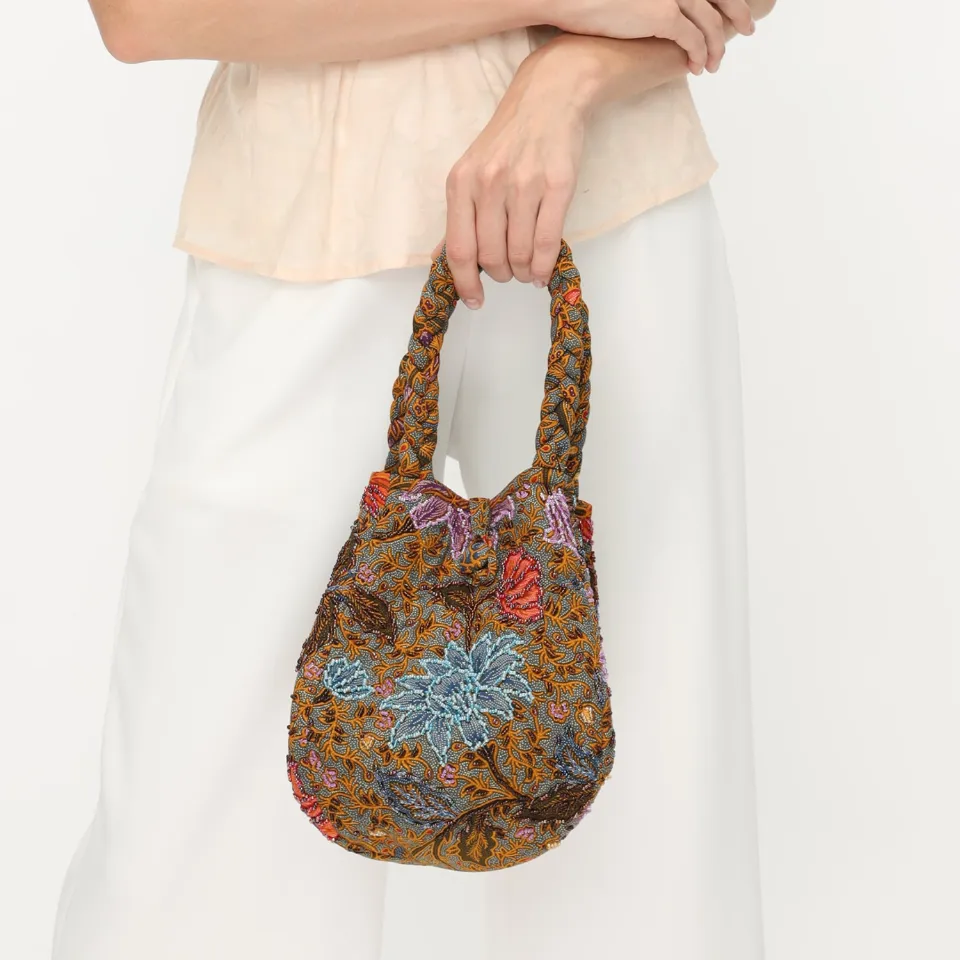
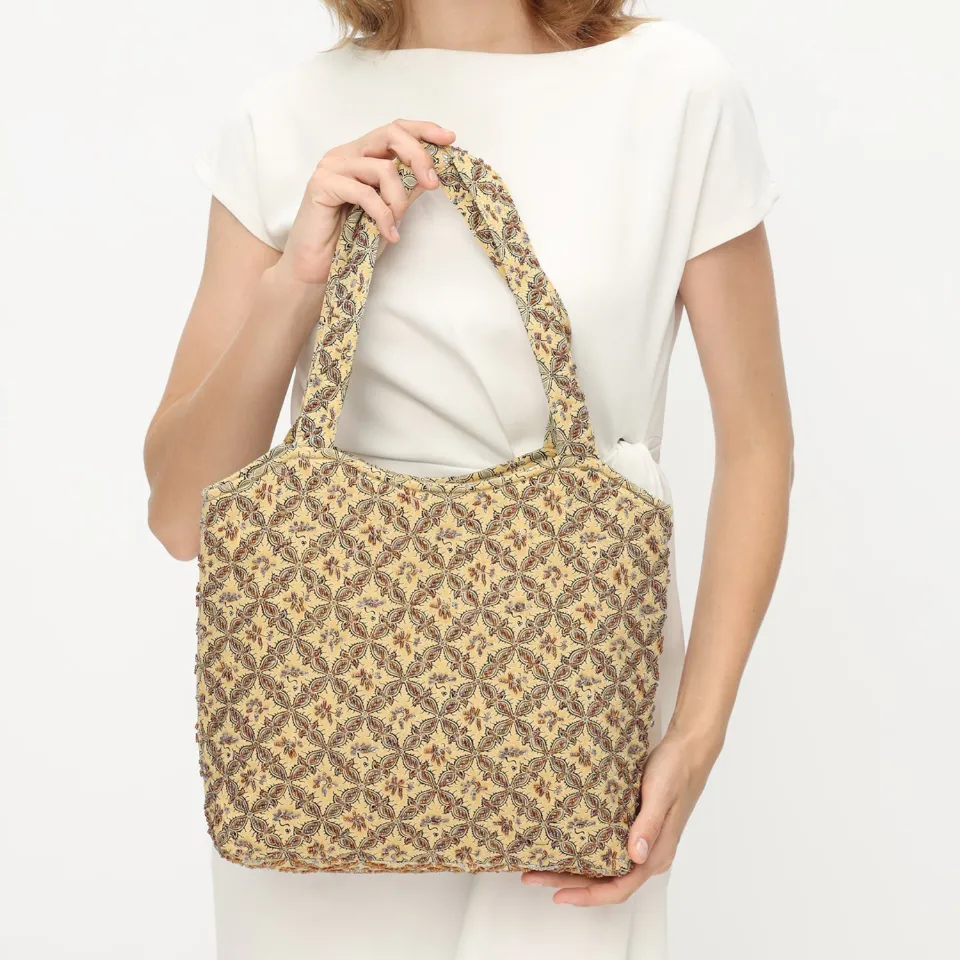
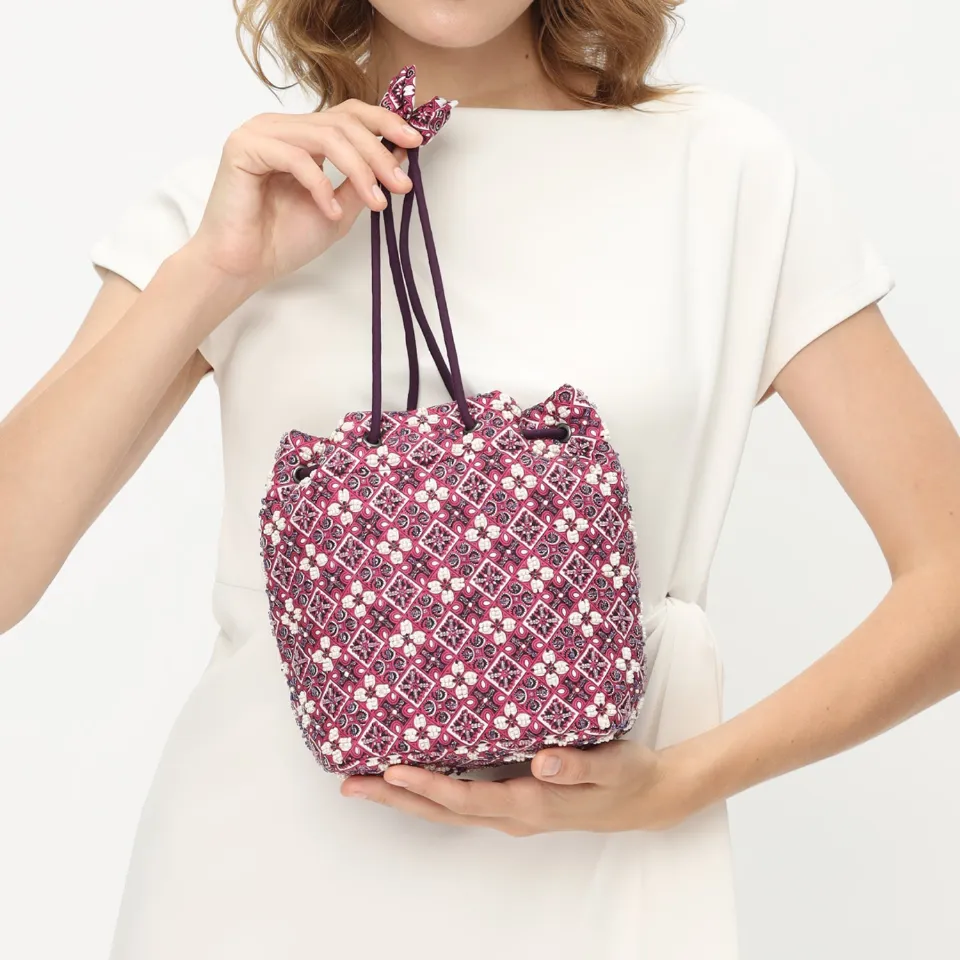
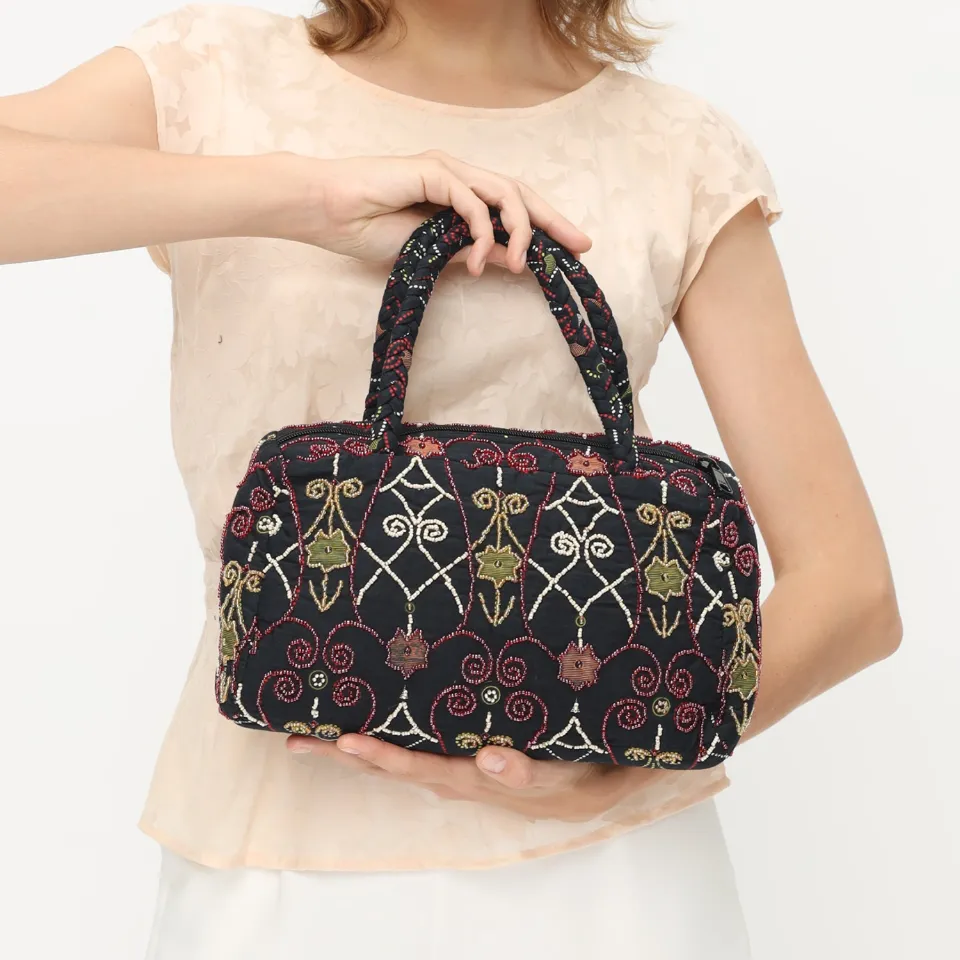
Not every fabric that carries batik motifs is made with wax. Printed batik-pattern textiles reproduce the designs with ink, which keeps them affordable and consistent. Here is exactly what we use: our beaded bags are made from cotton printed with traditional batik patterns and lined with polyester-cotton, and our Batik Buddies are sewn from Indonesian batik fabric.
What we do by hand is everything that turns cloth into a keepsake: choosing where each motif falls, cutting, stitching the beadwork bead by bead, attaching handles and finishing every seam. Because each piece is cut from a length of patterned cloth, the motif on your bag or Buddy sits a little differently every time — a small, honest sign of the hand. See it for yourself in pieces like the Rosewood Batik Beads bag, or explore the full collection.